

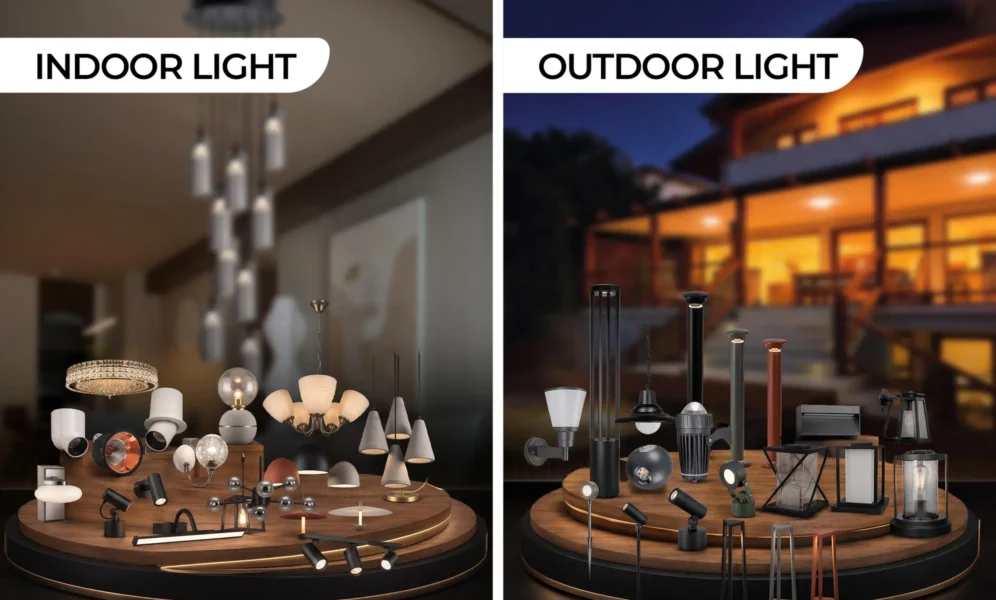
Lighting selection should never be the same for every space. Indoor lighting and outdoor lighting have different purposes, designs, brightness needs and safety requirements.
Indoor lights are mainly used for comfort, mood, visibility and interior design. Outdoor lights need to handle exterior conditions while improving safety, appearance and usability around the property.
If you are planning lighting for a new home, renovation, garden, balcony, façade, office or commercial project, this guide will help you understand the difference between indoor and outdoor lighting and how to choose the right lights for each space.
Difference Between Indoor and Outdoor Lighting
Indoor lighting is designed for rooms and interior spaces such as living rooms, bedrooms, kitchens, dining areas, passages and offices.
Outdoor lighting is designed for exterior spaces such as gardens, balconies, terraces, façades, gates, pathways and entrances.
The main difference is that outdoor lights need better durability, weather suitability and safer placement. Indoor lights are usually selected more for comfort, design, mood and room function.
Indoor Lighting Types
Indoor lighting should be selected based on the room, activity and interior style. Every room may need a different combination of lighting.
1. Ambient Lighting
Ambient lighting gives general brightness to the room. It is the main source of light for daily use.
Common options:
- Ceiling lights
- Downlights
- Panel lights
- Cove lighting
- Profile lighting
2. Task Lighting
Task lighting is used for specific activities such as cooking, reading, working or dressing.
Common options:
- Kitchen counter lights
- Study table lights
- Mirror lights
- Reading lights
- Under-cabinet lights
3. Accent Lighting
Accent lighting highlights design elements, walls, artwork, textures or décor.
Common options:
- Spotlights
- Wall washers
- Profile lights
- Track lights
- Display lights
4. Decorative Lighting
Decorative lighting adds beauty and character to the room.
Common options:
- Chandeliers
- Pendant lights
- Wall lights
- Statement lights
- Designer ceiling lights
Outdoor Lighting Types
Outdoor lighting should be chosen based on placement, safety, brightness and weather exposure.
1. Garden Lighting
Garden lights improve the appearance of plants, pathways and landscape areas.
Common options:
- Spike lights
- Bollard lights
- Garden spotlights
- Pathway lights
2. Balcony and Terrace Lighting
Balcony and terrace lights create a comfortable outdoor sitting area.
Common options:
- Wall lights
- Ceiling lights
- Decorative outdoor lights
- Warm ambient lights
3. Façade Lighting
Façade lighting highlights the outer look of a home, showroom, hotel or commercial building.
Common options:
- Wall washers
- Up-down lights
- Spotlights
- Linear lights
4. Pathway and Entrance Lighting
Pathway and entrance lights improve safety and guide movement during evening and night hours.
Common options:
- Step lights
- Gate lights
- Pathway lights
- Wall lights
- Bollard lights
5. Security and Utility Lighting
Security and utility lights are used for clear visibility around gates, parking areas, backyards and service zones.
Common options:
- Flood lights
- Sensor lights
- High-brightness outdoor lights
- Parking lights
Can Indoor Lights Be Used Outside?
In most cases, indoor lights should not be used outside. Outdoor spaces face dust, heat, moisture, rain and weather exposure. Indoor lights may not be designed to handle those conditions.
Using indoor lights outdoors can lead to poor performance, faster damage or safety issues. Always choose lights suitable for exterior use when planning outdoor areas.
What to Check Before Buying Outdoor Lights
Outdoor lighting needs more careful selection than indoor lighting. Before buying outdoor lights, check these points:
- Outdoor suitability
- IP rating
- Weather resistance
- Brightness level
- Installation location
- Material quality
- Wiring safety
- Maintenance needs
- Light colour
- Purpose of lighting
- Brand and product catalogue
For outdoor spaces, do not choose lights only based on design. Safety, durability and placement are equally important.
What Is IP Rating in Outdoor Lights?
IP rating means Ingress Protection rating. It shows how well a product is protected from dust and water.
Outdoor lights usually need better protection than indoor lights because they are exposed to weather conditions.
A higher IP rating generally means better protection against dust and water. The exact IP rating required depends on where the light will be installed, such as garden, façade, balcony, pathway or open terrace.
Before final selection, always confirm whether the light is suitable for the planned outdoor location.
Best Lighting for Garden Areas
Garden lighting should create a soft and beautiful outdoor atmosphere while improving visibility.
Best options for gardens:
- Spike lights for plants
- Bollard lights for pathways
- Spotlights for trees
- Warm outdoor lights for ambience
- Wall lights for garden walls
Warm white lighting often works well in gardens because it creates a pleasant and natural outdoor mood.
Best Lighting for Balconies
Balcony lighting should be comfortable and practical. It should not be too harsh, especially if the balcony is used for relaxing in the evening.
Best options for balconies:
- Wall lights
- Warm ceiling lights
- Decorative outdoor lights
- Small pendant lights, where suitable
- Indirect lighting
Choose lights based on balcony size, seating arrangement and weather exposure.
Best Lighting for Façades
Façade lighting improves the exterior look of homes, showrooms and commercial buildings. It can highlight wall textures, architectural lines and entrance areas.
Best options for façades:
- Up-down lights
- Wall washers
- Linear lights
- Spotlights
- Outdoor profile lights
Façade lighting should be planned carefully so the building looks elegant without becoming too bright or uneven.
Best Lighting for Pathways and Entrances
Pathway and entrance lighting helps people move safely and improves the first impression of the property.
Best options for pathways and entrances:
- Step lights
- Gate lights
- Bollard lights
- Wall lights
- Motion sensor lights
These lights should provide enough visibility without causing glare.
Indoor vs Outdoor Lighting: Quick Comparison
| Point | Indoor Lighting | Outdoor Lighting |
|---|---|---|
| Main purpose | Comfort, mood and room function | Safety, durability and exterior visibility |
| Common spaces | Living room, bedroom, kitchen, office | Garden, balcony, façade, pathway, entrance |
| Design focus | Interior style and atmosphere | Weather suitability and placement |
| Safety need | Normal indoor use | Higher protection required |
| Product selection | Based on room and mood | Based on location and exposure |
| Common lights | Ceiling lights, chandeliers, profile lights | Garden lights, wall lights, façade lights, pathway lights |
Common Mistakes to Avoid
Avoid these mistakes when choosing indoor and outdoor lights:
- Using indoor lights in outdoor spaces
- Ignoring IP rating for outdoor lights
- Choosing very bright outdoor lights without planning
- Using only one light source in large rooms
- Not checking colour temperature
- Forgetting pathway and entrance lighting
- Selecting lights only from photos
- Not comparing actual glow before buying
- Ignoring wiring and installation needs
- Mixing too many lighting styles in one space
The right lighting should look good, work well and suit the actual space.
How Volteca Helps You Choose Indoor and Outdoor Lights
At Volteca in Bhuj, customers can explore indoor and outdoor lighting options for homes, offices, gardens, balconies, façades, retail stores and commercial projects.
Our team helps you understand:
- Which lights suit indoor rooms
- Which lights are suitable for outdoor areas
- How to choose colour temperature
- How to compare actual glow and finish
- Which brand catalogue to review
- How to select lighting based on space and purpose
Instead of guessing from photos, you can visit the showroom and experience selected lighting options before finalising products.
Final Thoughts
Indoor and outdoor lighting have different roles. Indoor lighting improves comfort, mood and room function. Outdoor lighting improves safety, exterior beauty and usability.
Before choosing lights, consider where the light will be installed, how the space will be used, what brightness is required and whether the product is suitable for the location.
If you are planning indoor or outdoor lighting for your home, office, garden, balcony, façade or commercial project, visit Volteca in Bhuj. Our team can help you compare catalogues, understand suitable options and experience the actual glow before final selection.